Saareõue Aberdeen Angus
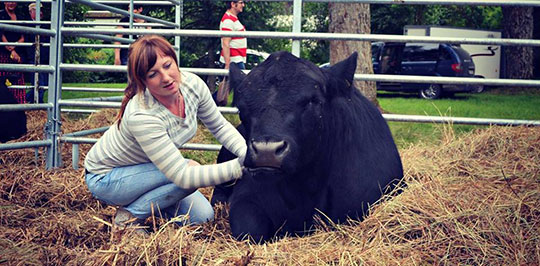
Saareõue OÜ is a family-run farm located in Pärnu County, Estonia, focused on Aberdeen Angus beef cattle breeding and organic farming. Situated in Häädemeeste parish near the Latvian border, our cattle graze on coastal pastures that in places stretch right to the sea. Here, among windy seaside grasslands and natural meadows, our Aberdeen Angus cattle grow freely on grass, in line with organic farming principles.
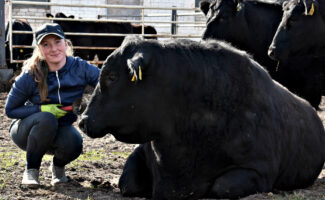
Aberdeen Angus cattle have been raised at Saareõue since 2006, with systematic breeding work beginning in 2012. Today, our herd has grown to around 200 head of cattle. Our breeding philosophy is simple: the animals must perform in our conditions, not the other way around. We focus on strong maternal traits, good health, and a calm, balanced temperament.
We use carefully selected Aberdeen Angus genetics to ensure the sustainable development of our herd and high-quality breeding stock. The bloodlines of our cattle originate mainly from Scotland, New Zealand, and Australia, regions known for strong and reliable Angus genetics.
The goal of Saareõue OÜ is to provide high-quality organic beef and reliable breeding stock for those who value clean food and sustainable agriculture.
Our Breeding Philosophy
Our cattle graze coastal meadows along the Estonian shoreline – areas where feed quality, ground conditions and the environment are not always favourable. This is something entirely different from a cultivated pasture with lush, uniform vegetation. Our animals must cope in challenging conditions, maintaining body condition while raising a calf at the same time. Conformation comes from genetics, not from feed.
Our Cows
Our cows are medium-sized – exactly the type that thrives in our conditions. Every cow must be fertile and produce a calf every year. Our cows must be able to raise a calf to weaning at around 50% of their own bodyweight, while maintaining their own condition at the same time.
Given our conditions, there is no room for compromise on feet and legs – and there shouldn’t be anywhere. Feet are critically important in our herd. A bad foot means a shorter productive life and constant problems. An animal that doesn’t move freely doesn’t eat enough. An animal that doesn’t eat enough is not productive. Bad feet are a direct path out of the herd.
Temperament must be excellent. Of course, every cow must protect her calf – but not from people. If a cow cannot be worked with during and after calving, she has no place in our herd.
Bulls
Essentially the same requirements apply to bulls as to cows. A bull must have strong health, be hardy and long-lived. Correct feet, good movement and balance are essential, combined with the confident, masculine behaviour you expect from a bull. We value masculinity and overall appearance – a bull must look like a bull. Working ability matters too: a bull must do his job efficiently and without problems.
Above all, a bull must suit our system – our pastures, our cattle and our philosophy. A bull that is excellent in another system may not be the right choice for our coastal grasslands. A bull is not just one animal in the herd – he produces 20 to 40 calves a year and contributes half of their genetics. The impact of one wrong choice carries forward for years.
Type Before Numbers
Modern breeding offers a wealth of tools – indexes, EPDs, genomic tests – but these can never be the sole basis for decisions. Numbers do not describe an animal’s type, presence, temperament or movement. For us, it is essential to see the animal as a whole. Conformation, movement and head shape all matter – alongside practicality, visual consistency and balance within the herd are also important. A balance must be found between type and numbers – going to either extreme, rarely produces anything good. We believe that despite all the information available, a breeder must also have a gut feeling that guides them forward.
Why Does All This Matter?
Todays modern angus has in many ways drifted from its original roots. Decades of selection towards larger frames, faster growth and grain-fed systems have produced cattle that perform well in a feedlot but struggle on pasture. Bigger does not always mean better – it often just means more costs.
The original Aberdeen Angus was something different. A moderate-sized, deep-bodied, structurally correct animal that converted even the poorest pasture into quality beef – without any additional inputs. It was balanced – not exceptional in just one trait, but functional as a whole. Good growth, easy calving, strong health, long productive life. All these qualities together, each supporting the other.
That balance is our key word. Performance and structure must go hand in hand. We do not breed for one trait – we breed for the whole animal. A cow that is fertile, calves easily, is milky, holds her condition and moves freely – that is our goal. Not a number in one column, but balance in everything.
Our aim is to breed animals that are productive, low-maintenance, grow on grass alone, require no additional feed and perform even in the most challenging conditions – animals that are a pleasure to have in the herd and easy to work with